



Cosmograph Daytona product history and timeline
History
We will explain the history and timeline of the Cosmograph Daytona. We will explain the product in an easy-to-understand manner, even for first-time users.
Daytona (Rolex) product history and chronology explained
| 2016 | The stainless steel model is equipped with a monobloc Cerachrom bezel that is highly corrosion-resistant, scratch-resistant, and less susceptible to UV rays. |
|---|---|
| 2013 | Introducing the platinum model celebrating Daytona's 50th anniversary. It weighs approximately twice as much as the stainless steel version and boasts a dignified design. |
| 2008 | The first pink gold Daytona model has been released, made from Everose gold, an alloy developed by Rolex in 2005. |
| 2000 | The engineers' long-cherished dream of developing a fully in-house chronograph movement was fulfilled, and Daytona became a manufacture watch. To prevent counterfeiting, the sapphire crystal was watermarked with the crown mark. |
| 1991 | The Ref. 16518, Daytona's first with a leather bracelet, was released and attracted a lot of attention. |
| 1998 | In addition to yellow gold and stainless steel, white gold has been added. The design has also been significantly renewed, and the plastic bezel, which was not very durable, has been eliminated. |
| 1988 | Based on the famous Zenith El Primero automatic movement, the Daytona, the only sports model to be manually wound, has been made automatic. |
| 1971 | The Daytona with a red dial, which is still rare today, was released. It features a design called "Ferrari Red." |
| 1963 | The company developed and released a chronograph based on the new concept of car racing, named the Daytona. By adopting inverted colors for the subdials and moving the tachymeter to the bezel, the timekeeping function was emphasized, establishing a design with excellent visibility that set it apart from other companies. |
| 1962 | Rolex becomes the Official Timekeeper of Daytona. |
| 1959 | Daytona International Speedway is completed in Daytona Beach, Florida, USA, as a stock car racing circuit. Rolex begins sponsorship. |
| 1920 | They did produce chronographs, but they were overshadowed by other three-hand models. |
Daytona Lineage
| 2016~Present | Daytona Ref. 116500LN |
|---|---|
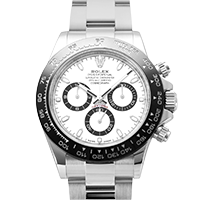 | Cal.4130 This is the current Daytona model, retaining the distinctive style of previous Daytona models while incorporating new materials in line with modern watchmaking. In response to the recent trend of watchmakers using materials not previously used in watches, such as carbon, ceramic, and titanium, the watch features a Cerachrom bezel, a proprietary technology developed and patented by Rolex. The use of a new material for the bezel gives the Ref. 116500 a classic yet sports watch feel, blending in with the times while still creating an innovative impression. Compared to metal materials, it is more scratch-resistant and resistant to aging. |
| 2000~2016 | Daytona Ref. 116520 |
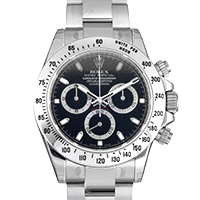 | Cal.4130 Thanks to the steady improvement of its technology, Rolex finally succeeded in developing its own in-house movements with this Daytona, becoming a fully in-house manufacture. While the general design of its predecessor, the Reference 16520, remained the same, the layout of the subdials on the dial was changed, and further changes can be seen, such as the addition of a small seconds hand at 6 o'clock and a 12-hour counter at 9 o'clock. Another outstanding feature of the in-house movement, the Caliber 4130, is that it extended its power reserve to 72 hours, compared to the standard power reserve of around 50 hours at the time. While this is now a common length, it firmly established Rolex's high level of technical expertise. |
| 1988~2000 | Daytona Ref. 16520 |
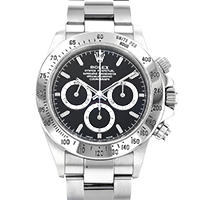 | Cal.4030 More than 40 years after its release, the Daytona is equipped with Zenith's "El Primero," a chronograph movement still considered the world's greatest masterpiece, boasting a 36,000 vibrations per hour and a 50-hour power reserve. The plastic crystal was replaced with sapphire crystal, and technological advances in the finer details led to a major change in water resistance, increasing it from 50m to 100m. This marked the beginning of the current 40mm case size, sparking the so-called luxury sports boom. The birth of the Ref. 16520 marked a major leap forward for Rolex and the Daytona. |
| 1969~1988 | Daytona Ref. 6262 / Ref. 6264 |
Cal.727 This model, which could be said to be the perfected version of the hand-wound Daytona, embodied all the successes and failures of the past. It featured the Caliber 727 movement inherited from the short-lived but renowned Ref. 6262/Ref. 6264, and introduced the screw-locked Oyster case, which enabled water resistance to 50m, enhancing practicality in the Ref. 6240, thereby combining both precision and water resistance. It was a pioneering model for luxury, practical wristwatches, and made the Daytona name, which continues to this day, known to the world. | |
| 1970~1971 | Daytona Ref. 6262 / Ref. 6264 |
Cal.727 Although it was the successor to the Ref. 6240, it was only produced for about a year due to the lack of an Oyster case and its lack of practicality. However, this was the time when the new Daytona movement, the Cal. 727, was born, and it became the starting point for the creation of hand-wound Daytonas for the next 20 years or so. | |
| 1965~1970 | Daytona Ref. 6240 |
Cal.72B, Cal.722, Cal.722-1 The Ref. 6240 remains shrouded in mystery, and is widely known as a rare Daytona, produced only for a few years before the birth of the third-generation Daytona. The screw-lock mechanism, or Oyster system, successfully improved the Daytona's water resistance to 50m. It was also the first to feature the word "Oyster" on the dial, making it an extremely rare model in Rolex history. | |
| 1963~1970 | Daytona Ref. 6239 / Ref. 6241 |
Cal.72B, Cal.722, Cal.722-1 This was the first Daytona model with ties to motorsports, and it established the image of the Daytona as we know it today. The bezels of the Ref. 6239 were stainless steel, while the Ref. 6241 was plastic, both of which are popular and iconic Daytona models. This model is also famous for being worn by the legendary actor Paul Newman, and the "Paul Newman model" is known as a very expensive watch. | |
| 1950-1960 | Chronograph Reference 6238 |
Cal.72B This historic model is the predecessor to the Daytona. Also known as the Pre-Daytona, it features the word "chronograph" engraved on the dial. The tachymeter is housed within the dial, and unlike modern Daytonas, it features subdials in the same color as the dial. However, this model established the universal style of the prototype Daytona, with a 30-minute counter, a 12-hour counter, and a small seconds hand, making it a well-known and popular model among many antique Rolexes. |
| 2016~ | Daytona Ref. 116500LN | |
|---|---|---|
| ||
Cal.4130 This is the current Daytona model, retaining the distinctive style of previous Daytona models while incorporating new materials in line with modern watchmaking. In response to the recent trend of watchmakers using materials not previously used in watches, such as carbon, ceramic, and titanium, the watch features a Cerachrom bezel, a proprietary technology developed and patented by Rolex. The use of a new material for the bezel gives the Ref. 116500 a classic yet sports watch feel, blending in with the times while still creating an innovative impression. Compared to metal materials, it is more scratch-resistant and resistant to aging. | ||
| 2000~2016 | Daytona Ref. 116520 | |
| ||
Cal.4130 Thanks to the steady improvement of its technology, Rolex finally succeeded in developing its own in-house movements with this Daytona, becoming a fully in-house manufacture. While the general design of its predecessor, the Reference 16520, remained the same, the layout of the subdials on the dial was changed, and further changes can be seen, such as the addition of a small seconds hand at 6 o'clock and a 12-hour counter at 9 o'clock. Another outstanding feature of the in-house movement, the Caliber 4130, is that it extended its power reserve to 72 hours, compared to the standard power reserve of around 50 hours at the time. While this is now a common length, it firmly established Rolex's high level of technical expertise. | ||
| 1988~2000 | Daytona Ref. 16520 | |
| ||
Cal.4030 More than 40 years after its release, the Daytona is equipped with Zenith's "El Primero," a chronograph movement still considered the world's greatest masterpiece, boasting a 36,000 vibrations per hour and a 50-hour power reserve. The plastic crystal was replaced with sapphire crystal, and technological advances in the finer details led to a major change in water resistance, increasing it from 50m to 100m. This marked the beginning of the current 40mm case size, sparking the so-called luxury sports boom. The birth of the Ref. 16520 marked a major leap forward for Rolex and the Daytona. | ||
| 1969~1988 | Daytona Ref. 6262 / Ref. 6264 | |
Cal.727 This model, which could be said to be the perfected version of the hand-wound Daytona, embodied all the successes and failures of the past. It featured the Caliber 727 movement inherited from the short-lived but renowned Ref. 6262/Ref. 6264, and introduced the screw-locked Oyster case, which enabled water resistance to 50m, enhancing practicality in the Ref. 6240, thereby combining both precision and water resistance. It was a pioneering model for luxury, practical wristwatches, and made the Daytona name, which continues to this day, known to the world. | ||
| 1970~1971 | Daytona Ref. 6262 / Ref. 6264 | |
Cal.727 Although it was the successor to the Ref. 6240, it was only produced for about a year due to the lack of an Oyster case and its lack of practicality. However, this was the time when the new Daytona movement, the Cal. 727, was born, and it became the starting point for the creation of hand-wound Daytonas for the next 20 years or so. | ||
| 1965~1970 | Daytona Ref. 6240 | |
Cal.72B, Cal.722, Cal.722-1 The Ref. 6240 remains shrouded in mystery, and is widely known as a rare Daytona, produced only for a few years before the birth of the third-generation Daytona. The screw-lock mechanism, or Oyster system, successfully improved the Daytona's water resistance to 50m. It was also the first to feature the word "Oyster" on the dial, making it an extremely rare model in Rolex history. | ||
| 1963~1970 | Daytona Ref. 6239 / Ref. 6241 | |
Cal.72B, Cal.722, Cal.722-1 This was the first Daytona model with ties to motorsports, and it established the image of the Daytona as we know it today. The bezels of the Ref. 6239 were stainless steel, while the Ref. 6241 was plastic, both of which are popular and iconic Daytona models. This model is also famous for being worn by the legendary actor Paul Newman, and the "Paul Newman model" is known as a very expensive watch. | ||
| 1950-1960 | Chronograph Reference 6238 | |
Cal.72B This historic model is the predecessor to the Daytona. Also known as the Pre-Daytona, it features the word "chronograph" engraved on the dial. The tachymeter is housed within the dial, and unlike modern Daytonas, it features subdials in the same color as the dial. However, this model established the universal style of the prototype Daytona, with a 30-minute counter, a 12-hour counter, and a small seconds hand, making it a well-known and popular model among many antique Rolexes. | ||
Handling brand
- ROLEX
Rolex Cartier
Cartier OMEGA
OMEGA PATEK PHILIPPE
PATEK PHILIPPE AUDEMARS PIGUET
AUDEMARS PIGUET Breguet
Breguet ROGER DUBUIS
ROGER DUBUIS A.LANGE & SOHNE
Lange & Söhne HUBLOT
HUBLOT FRANCK MULLER
FRANCK MULLER CHANEL
CHANEL HARRY WINSTON
HARRY WINSTON JAEGER LE COULTRE
JAEGER LE COULTRE IWC
IWC PANERAI
PANERAI BREITLING
BREITLING TAG HEUER
TAG HEUER Van Cleef & Arpels
Van Cleef & Arpels HERMES
Hermes Chopard
Chopard ZENITH
Zenith DAMIANI
Damiani TUDOR
Tudor (Tudor) TIFFANY&Co.
Tiffany PIAGET
Piaget BOUCHERON
Boucheron BVLGARI
BVLGARI RICHARD MILLE
Richard Mille