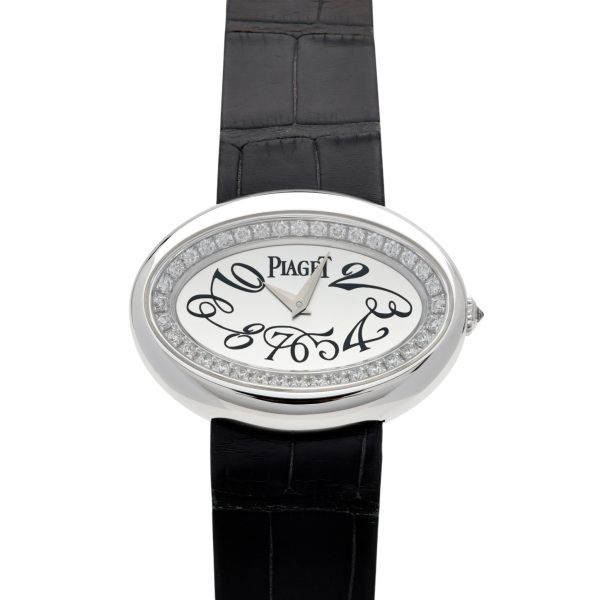
Piaget is a luxury watch brand founded in 1874 by Georges-Édouard Piaget in La Côte-aux-Fées, Jura, Switzerland. Initially, the company specialized in the manufacture of high-precision watch movements and supplied them to many watch manufacturers.
In 1943, Piaget began full-scale production of watches under its own brand, developing luxury watches that utilized its unique designs and technology. Subsequently, in 1957, it released the world's thinnest manual-winding movement, "Calibre 9P," and in 1960 developed the ultra-thin automatic movement, "Calibre 12P," measuring just 2.3 mm thick. These developments established Piaget's position as a "prestigious manufacturer of ultra-thin watches."
In the 1970s, Piaget expanded into the jewelry watch field, releasing a succession of elegant and artistically designed timepieces. Gorgeous models featuring dials adorned with precious stones such as onyx, lapis lazuli, and malachite were particularly popular. In 1979, the sporty and elegant "Piaget Polo" was released, becoming a new iconic model.
In the 21st century, Piaget continued to evolve its watchmaking techniques, launching the Extremely Thin model in 2010, featuring the world's thinnest automatic tourbillon. In 2018, the Altiplano Ultimate Concept, measuring just 2mm thick, solidified Piaget's leadership in the ultra-thin watch segment.
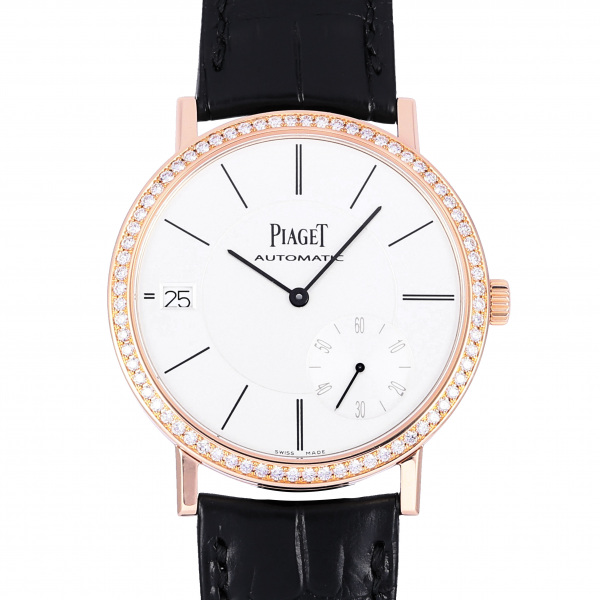
Today, Piaget offers collections such as the Altiplano, Polo, and Limelight, and continues to provide luxury watches that combine outstanding technology with beautiful, jewelry-like designs.
Piaget's distinctive features
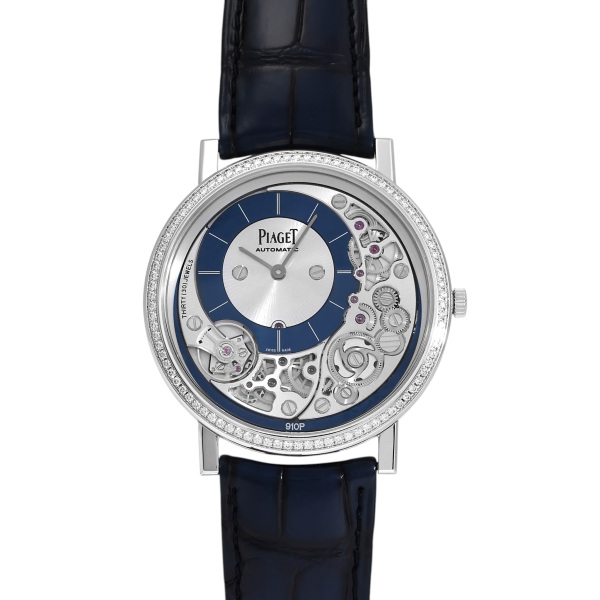
Piaget has always pursued the creation of ultra-thin movements, and has developed a succession of groundbreaking thin movements, including the 9P manual-winding movement released in 1957 and the 12P automatic movement in 1960, making its mark on the history of watchmaking. This thinning technology gives Piaget watches a unique elegance and comfortable fit.
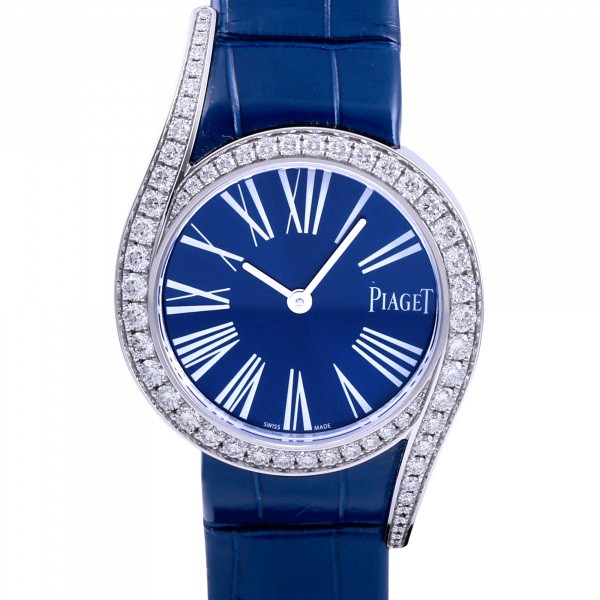
Piaget's bold and original designs are also a major attraction. These include the Limelight Gala, which features an asymmetrical case, and designs that use free-flowing curves such as cushion and oval shapes, and are characterized by artistic expression that goes beyond the boundaries of traditional watches.
Particularly from the 1960s to the 1970s, the company released many watches with avant-garde designs, leading the way at the time.